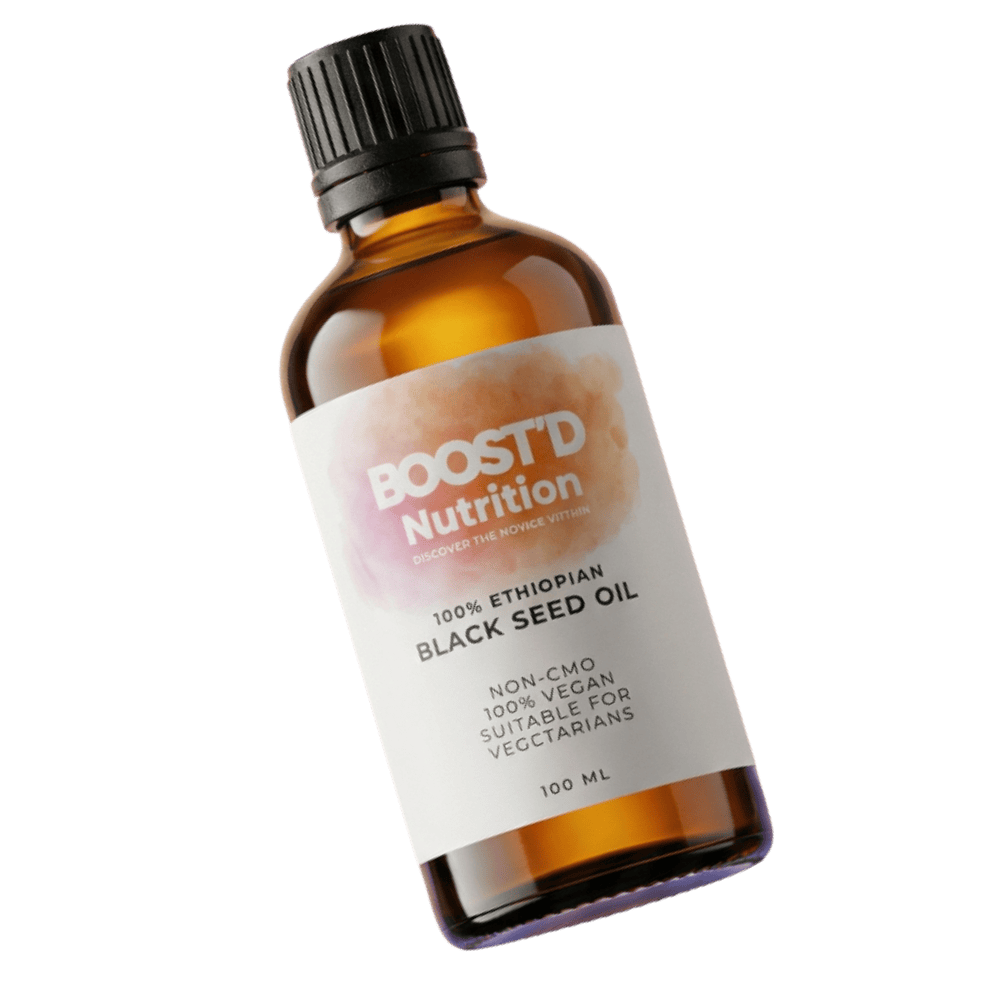
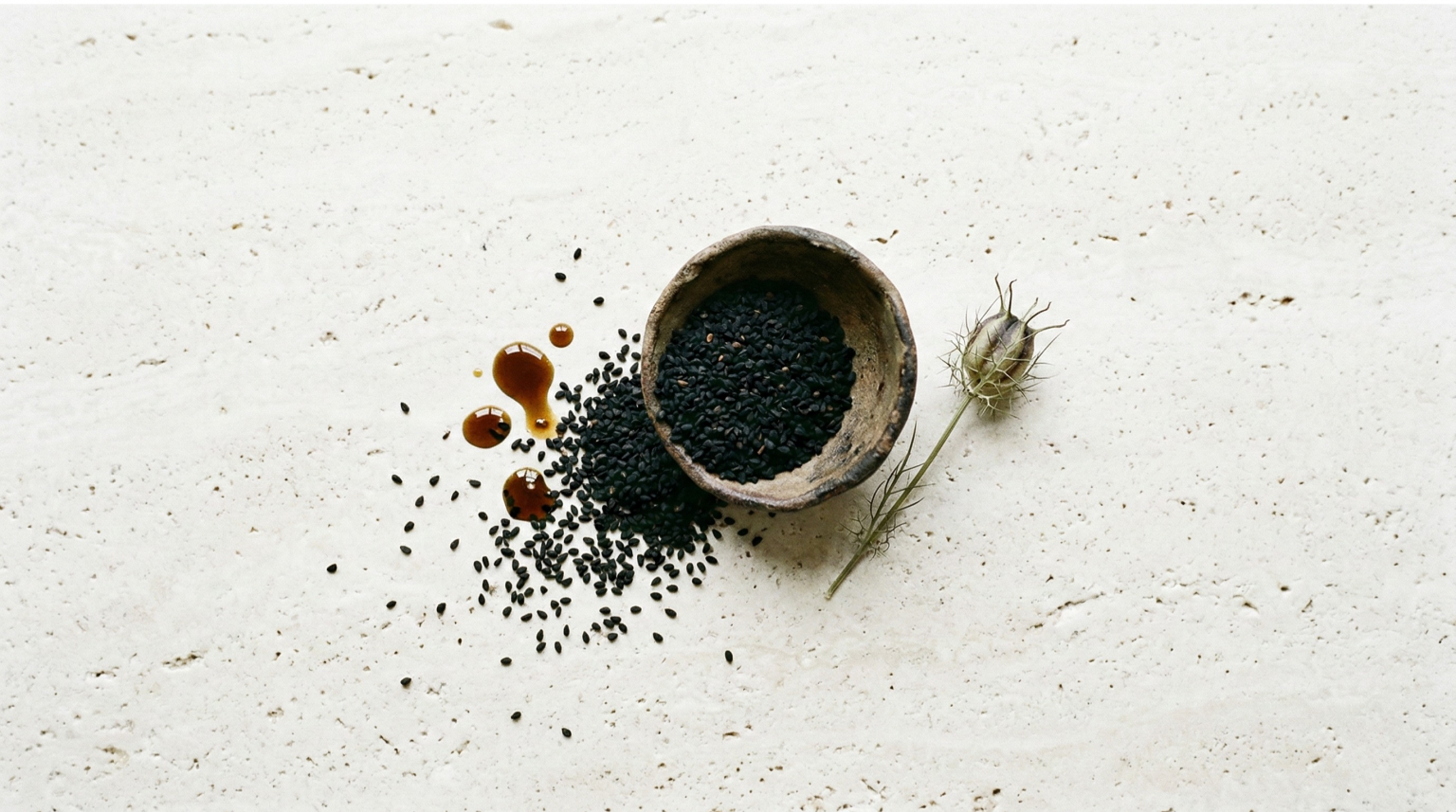
Black seed oil UK health seekers are increasingly turning to is one of the most studied traditional remedies in the world — cold-pressed from the seeds of Nigella sativa, an annual flowering plant indigenous to Southern Europe, North Africa and Southwest Asia. Black Seed, Black Cumin and Black Caraway are all regional names for the same plant in the Ranunculaceae family.
The oil contains two primary fractions that work together:
Fixed oils (32-40% of seed composition) — linoleic acid (omega-6) and oleic acid (omega-9), alongside plant sterols including beta-sitosterol. These support cardiovascular health and skin barrier integrity.
Volatile oils (0.4-2.45% of seed composition) — the pharmacologically active fraction containing thymoquinone. The concentration of thymoquinone within this fraction is the primary determinant of a Black Seed Oil’s potency and bioactive value.
Black Seed has been documented in the tomb of Pharaoh Tutankhamun — evidence of use in ancient Egypt over 3,000 years ago. It features in the medical canons of Hippocrates and Dioscorides. In Islamic Prophetic medicine it holds a central position, described as a remedy for everything except death.
It has been used continuously across the Middle East, North Africa and the Indian subcontinent for respiratory health, digestive support, immune resilience and skin conditions for over two millennia. This breadth and duration of traditional use provides a longitudinal dataset of real-world safety and application that most modern compounds cannot match.
Thymoquinone (TQ) is the predominant compound in Black Seed Oils volatile fraction and is responsible for the majority of its documented effects. Over 2,000 peer-reviewed studies have examined its role in inflammation, immunity, oxidative stress and metabolic function.
Anti-inflammatory: Inhibits 5-lipoxygenase (5-LOX) and modulates pro-inflammatory cytokines including IL-5, IL-6 and IL-13. Clinical studies have shown meaningful reductions in C-reactive protein (CRP) — a blood marker of systemic inflammation. Evidence level: Moderate to High.
Antioxidant: Scavenges reactive oxygen species (ROS) to protect cells from oxidative damage. Evidence level: High.
Immunomodulatory: Supports natural killer (NK) cell activity and modulates CD4/CD8 immune cell ratios — helping the immune system respond intelligently rather than indiscriminately. Evidence level: Moderate.
Digestive: Antispasmodic effects on gut smooth muscle, anti-inflammatory effects on the gut lining and antimicrobial activity against Helicobacter pylori. Evidence level: Moderate.
Respiratory: Bronchodilatory and antihistamine-like properties supporting airway comfort. Human RCTs have shown improvements in peak expiratory flow. Evidence level: Moderate.
Metabolic: Research identifies 2g per day as the studied dose for glycemic and lipid support. Studies have shown reductions in HbA1c, fasting blood glucose and LDL cholesterol. Evidence level: Moderate to High.
All claims are based on published research. BOOSTD Black Seed Oil is a food supplement. It is not a medicine and does not treat, cure or prevent any disease.
Not all Black Seed Oil is equal. Thymoquinone percentage is rarely disclosed or independently verified by brands. BOOSTD meets the following standards:
| Thymoquinone content | 2.55% — independently verified by Eurofins Consumer Product Testing GmbH |
| Market average TQ | 0.5 to 1.5% |
| Extraction method | Cold-pressed — preserves TQ and all fatty acids |
| Third-party testing | Eurofins Consumer Product Testing GmbH |
| Category | Food supplement — not a medicine |
Cold-pressing is essential. Heat extraction degrades thymoquinone and the volatile oil fraction. A product that does not state cold-pressed extraction cannot guarantee TQ integrity. A product that does not provide independent third-party verification of TQ percentage cannot confirm potency.
Take the recommended daily serving with food. Morning use is generally preferred — it supports digestive and immune function throughout the day. If you have a sensitive digestive system, start with half the recommended serving for the first week and build up gradually.
Black Seed Oil has a distinctive pungent, slightly bitter and peppery taste. Take it neat, or mix into a smoothie or yoghurt. Do not heat it — high temperatures degrade the thymoquinone content.
Store in a cool dark place away from sunlight and heat.
With BOOST’D Greens — the most common morning combination. Greens provides the prebiotic fibre and micronutrient foundation. Black Seed Oil adds direct anti-inflammatory and immune-modulating activity. Together they address the gut-immune axis comprehensively.
With Chaga — for customers focused on immune resilience. Chaga provides beta-glucan immunomodulation. Black Seed Oil provides thymoquinone NK cell support. Complementary mechanisms.
With Ashwagandha — for stress-driven inflammation. Ashwagandha in the evening addresses cortisol. Black Seed Oil in the morning addresses the systemic inflammation chronic stress drives.
| Week 1-2 | Many customers notice digestive comfort improvements. Some notice improved skin clarity. A mild digestive adjustment in week one is normal and typically resolves quickly. |
| Week 2-6 | Anti-inflammatory and immune-modulating effects building with consistent daily use. |
| Week 6-8+ | Full immune and anti-inflammatory benefit. Most clinical trials show meaningful outcomes at the 8 to 12 week mark. |
Consistency is essential. Daily use over a minimum of 6-8 weeks is the appropriate assessment period.
Black Seed Oil may be appropriate for adults seeking support with immune resilience, inflammatory balance, digestive comfort, respiratory health, skin health or metabolic wellbeing. It is a food supplement — it does not treat any condition.
Black Seed Oil is a cold-pressed oil from the seeds of Nigella sativa, used in traditional medicine across Egyptian, Greek, Islamic and Ayurvedic traditions for over 2,500 years. Its primary active compound is thymoquinone, studied for anti-inflammatory, immunomodulatory and digestive-supporting properties.
Thymoquinone (TQ) is the primary bioactive in Black Seed Oil. Most products contain 0.5-1.5% TQ. BOOSTD Black Seed Oil is independently verified at 2.55% TQ by Eurofins — significantly above the market average. Higher TQ means more meaningful bioactive delivery per serving.
Many customers notice digestive improvements within 1-2 weeks. Immune and anti-inflammatory benefits are cumulative — the meaningful assessment period is 6-8 weeks of consistent daily use.
Yes. It combines well with BOOSTD Greens for digestive and nutritional support and with Chaga for broader immune modulation. Those on anticoagulant or blood glucose medication should consult their GP first.
Yes for healthy adults at the recommended serving. Those on anticoagulants, blood glucose medication, blood pressure medication or immunosuppressants should consult their GP. Not recommended during pregnancy without GP approval.
It has a distinctive pungent, slightly bitter and peppery taste. Taking it with food helps. It can be mixed into a smoothie or yoghurt. Do not heat it as this degrades the thymoquinone content.
They are the same plant — Nigella sativa. Black Seed, Black Cumin and Black Caraway are regional names for the same plant in the Ranunculaceae family.
Store in a cool dark place away from sunlight and heat. Cold-pressed oils are sensitive to light and heat which degrade thymoquinone over time. Refrigeration is acceptable but not essential.
Those on anticoagulants (Warfarin, Aspirin, Clopidogrel), blood glucose medication (Metformin, insulin), blood pressure medication or immunosuppressants should consult their GP. Stop 2 weeks before surgery. Avoid during pregnancy. Consult GP if breastfeeding or under 18.
Research has examined its role in immune resilience, inflammatory balance, digestive health, respiratory comfort, skin health and metabolic support. BOOSTD Black Seed Oil is a food supplement — it is not a medicine and does not treat or prevent any disease.